
Description
recteq RT-B380 Bullseye: the pellet grill built to run hot
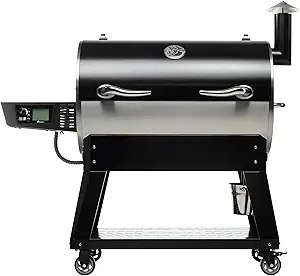
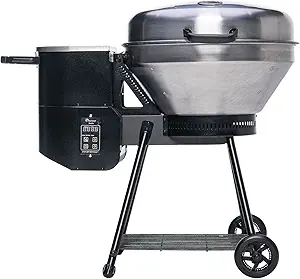
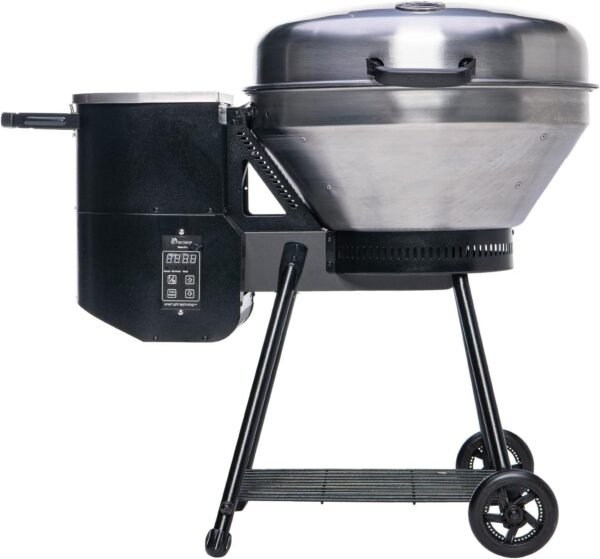
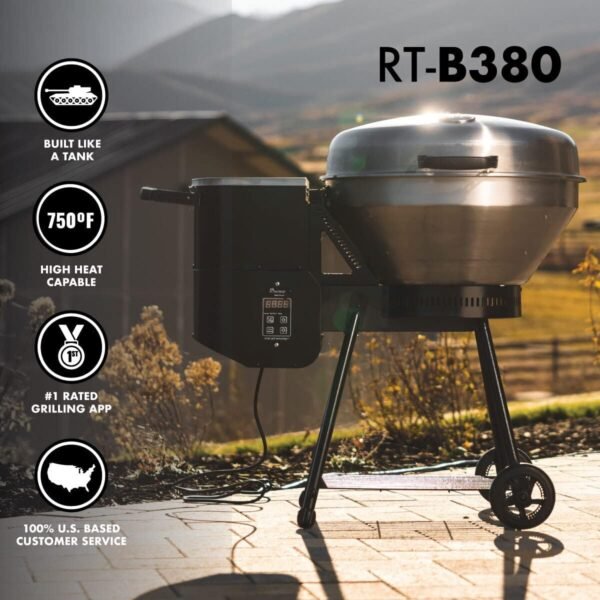
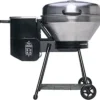
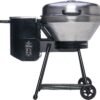
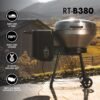
The Bullseye is recteq’s compact pellet cooker and it is aimed at a different job than the company’s large smokers. The listing gives 380 square inches of cooking area, a 15 pound pellet hopper, a stated ceiling of 749 degrees Fahrenheit, a 22 inch stainless dome with rainproof venting, assembled dimensions of 40 inches wide by 22.5 deep by 36 high, and a weight of 70 pounds. Amazon records it as first available in September 2022, with a 4.1 star average across 340 ratings and a rank around 124th in outdoor smokers.
The number that separates this from most pellet grills is the temperature ceiling. Conventional pellet cookers top out somewhere between 450 and 500 degrees because a heat deflector sits between the fire pot and the food, making the whole cooker an indirect convection oven. The Bullseye uses an open flame design instead, exposing the grate to the fire, which is how it reaches searing temperatures that indirect pellet grills cannot. That is the design trade in a sentence: this cooker sears, and it does less of the gentle, evenly diffused smoking that a deflector plate enables.
380 square inches, and what actually fits
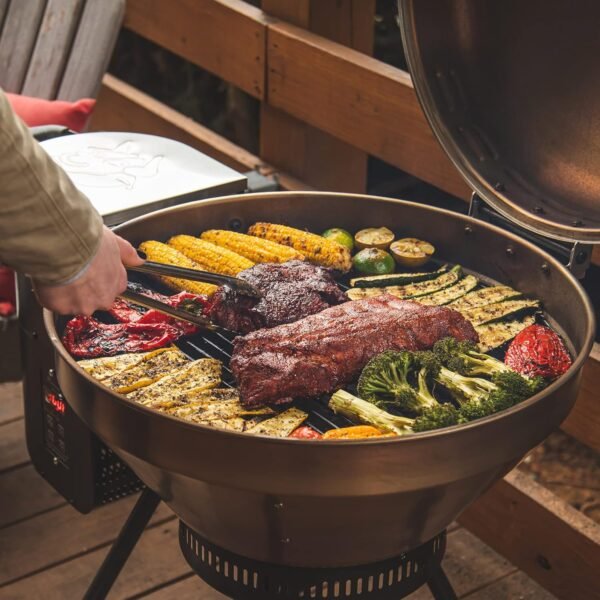
recteq gives useful capacity examples rather than abstract numbers: three whole chickens, four racks of baby back ribs, 50 chicken wings, or 15 bone in pork chops. That is a household sized grate. It handles a family dinner and a small gathering, and it runs out of room at a large party.
Anyone whose priority is capacity should be looking at the recteq Flagship 1100 instead, which the listing puts at 1,100 square inches with a 40 pound hopper. The Flagship is an indirect cooker with a lower stated ceiling of 700 degrees, so the two models are not simply small and large versions of one design. They cook differently, and the choice between them is about whether searing or long unattended smoking matters more.
The 15 pound hopper is the practical limit on long cooks
Fifteen pounds of pellets is a modest reserve. At a low smoking setpoint that is a long session, but at high heat a pellet cooker consumes fuel quickly, and running near 749 degrees will empty a small hopper fast. Anyone planning an overnight brisket should expect to check and refill rather than assume a full hopper covers the cook. This is the clearest functional consequence of choosing the compact model.
The igniter is rated for 100,000 lighting cycles, which is a durability specification rather than a performance one. On pellet grills the igniter is a common wear item, so a published cycle rating is a reasonable thing for recteq to advertise, and it is one of the few numbers in this listing that speaks to longevity.
Build and weather exposure
recteq specifies stainless steel for both the outer and inner materials and calls out rainproof venting on the 22 inch dome. Stainless matters on a cooker that lives outdoors, since the alternative at this size is painted steel that eventually blisters and rusts at the seams. Rainproof venting addresses a specific pellet grill problem: pellets are compressed sawdust held together by their own lignin, and they disintegrate into unusable sawdust when they get damp. Water reaching the hopper or the fire pot is the single fastest way to ruin both a cook and a hopper of fuel.
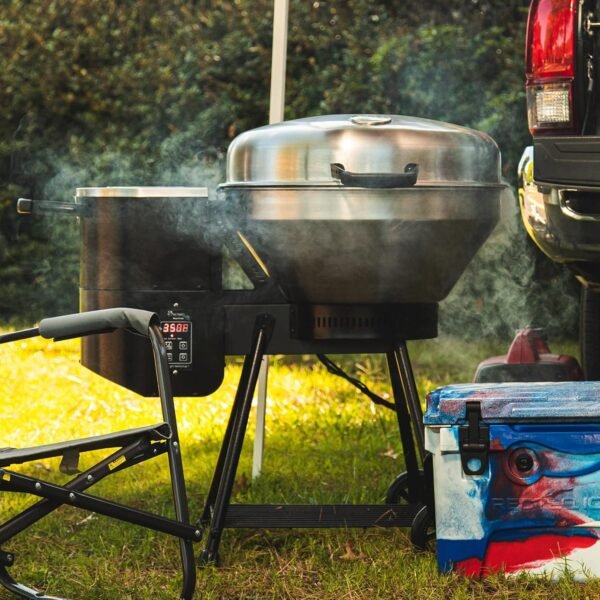
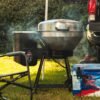
The listing describes the Bullseye as a portable pellet grill. At 70 pounds and 40 inches wide, that word needs qualifying. It is portable relative to a 204 pound full size cooker, and it is movable around a patio or into a garage. It is not something one person lifts into a car for a tailgate. Buyers who need genuine portability should be comparing a tabletop propane unit like the Cuisinart Grillster at 13 pounds, and the propane grills section generally.
One marketing claim this review will not repeat
The listing states that the Bullseye delivers consistent heat and results unlike any other wood pellet grill smoker on the market. That is an unsupported comparative claim, and it is not carried forward here. No comparison test backs it, and this site does not run cooking tests of its own. The verifiable statements are the ones with numbers attached: 380 square inches, a 15 pound hopper, a 749 degree stated ceiling, 70 pounds, stainless construction and a 100,000 cycle igniter rating. Those are what a buyer can act on.
Equally, a 4.1 star average across 340 ratings is worth noting without over reading. It is a solid score on a reasonable sample, and it sits a little below the 4.7 average recorded on the larger Flagship. Open flame pellet designs demand more attention to grease management and flare ups than a deflector plate design does, which is a plausible source of some of that gap, though the listing data alone cannot confirm it.
How it compares against charcoal
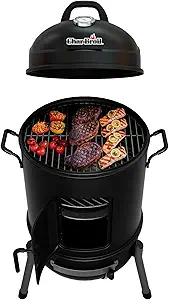
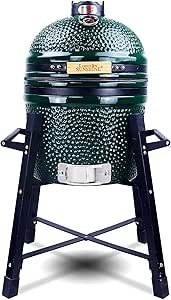
Against a Char Broil Bullet charcoal smoker, the Bullseye trades fire tending for a controller and a wall outlet, and it costs considerably more. Against a kamado style ceramic grill it gives up the ceramic’s heat retention and fuel economy but gains a controller and a lighter body. The broader lineup sits under smokers.
The honest summary is that a pellet grill is a convenience purchase. Wood pellets produce a milder smoke than charcoal with hardwood chunks, and cooks who want a heavy smoke profile generally end up disappointed by any pellet cooker. What they get in exchange is a set temperature that holds itself and a cooker that lights in minutes.
Who it suits
The Bullseye fits a household that wants pellet convenience but also wants to sear a steak properly, on a patio where a full size cooker would not fit. Stainless construction, weather resistant venting and a durable igniter make it a reasonable long term outdoor appliance.
It does not suit anyone planning regular unattended overnight cooks, since the 15 pound hopper is the wrong size for that, and it does not suit anyone chasing the strongest possible smoke flavor. Those buyers should size up within the recteq range or move to charcoal.