Description
Char-Broil Bullet 16 inch: the simplest way into charcoal smoking
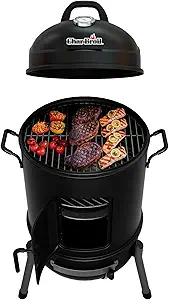
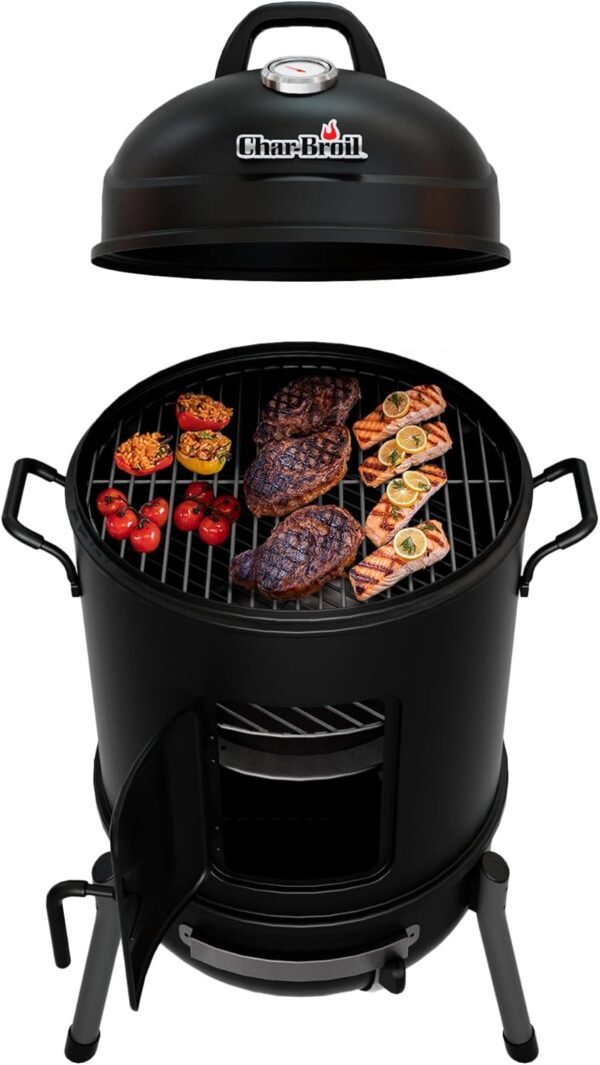
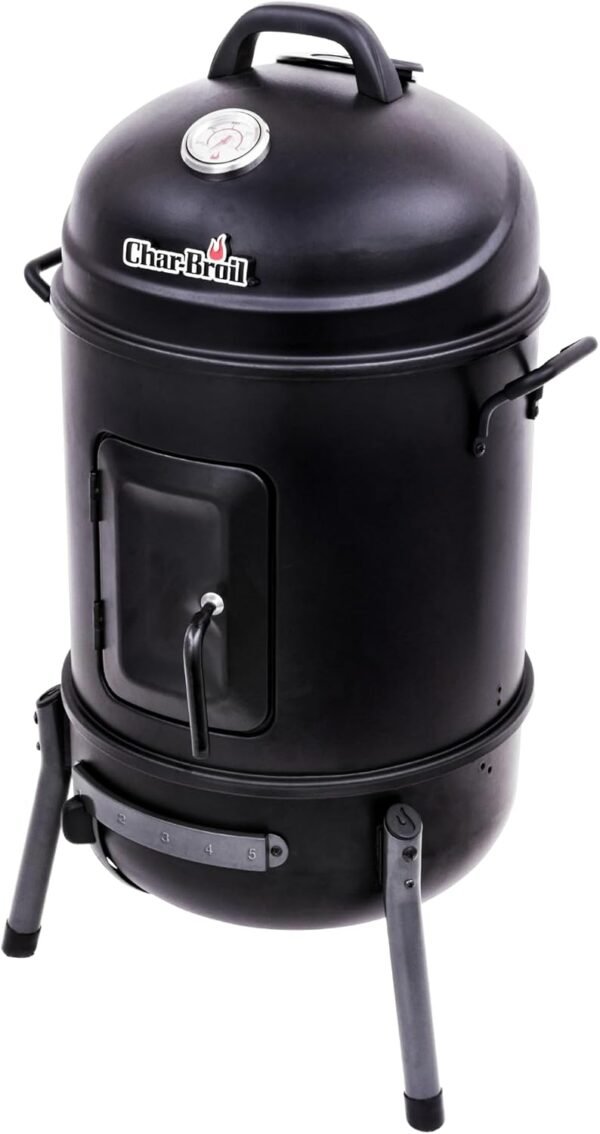
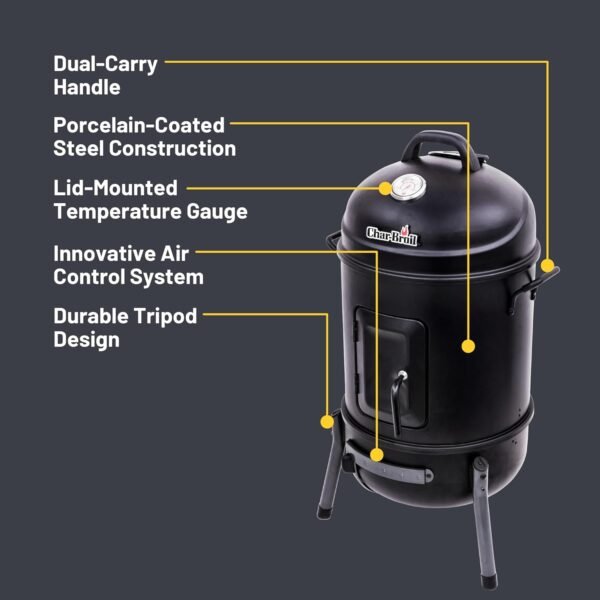
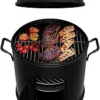
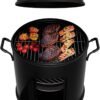
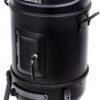
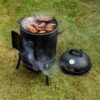
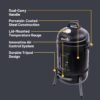
The Bullet, model 18202075, is Char-Broil’s 16 inch vertical charcoal smoker in black. The listing specifies 388 square inches of cooking space across two porcelain coated grates, a porcelain coated steel lid, body and fire bowl, an included water pan and ash pan, an air control system, dual carry handles, a lid mounted temperature gauge, and a one year warranty covering the firebox and parts.
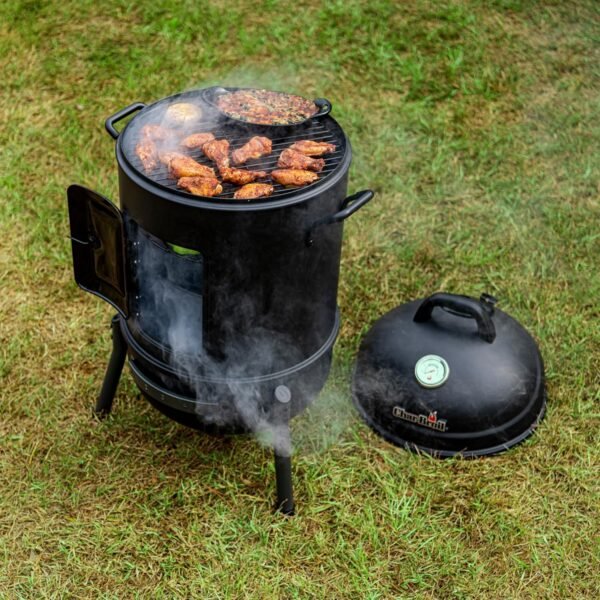
The bullet or vertical water smoker format is one of the oldest and most forgiving charcoal designs. Charcoal burns in a bowl at the bottom, a water pan sits above it, and two circular cooking grates stack above that inside a cylindrical body. Heat rises past the water pan, which absorbs and evens it out, and the food cooks in indirect heat and smoke for hours. There is no firebox to balance against a chimney and no offset flow to learn. Set the vents, light the coals, and the geometry does most of the work.
What the water pan is actually for
New owners often treat the water pan as optional. It is the most important part of this design. Water has a very high thermal mass, so a full pan resists temperature swings, which is what lets a cheap steel cylinder hold a stable 225 to 250 degrees for hours without constant fiddling. It also caps the temperature just above the boiling point of water in the zone directly above it, which is a useful safety net during a long unattended cook.
The secondary effect is humidity. A moist chamber slows the drying of the meat surface, which keeps the bark developing rather than setting hard early, and it helps smoke adhere. Cooks who want a drier, crisper exterior sometimes run the pan empty as a heat shield instead, which is a legitimate technique on this design and worth knowing about.
388 square inches across two levels
Two stacked 16 inch grates give roughly 388 square inches in total. That is enough for two pork butts, a couple of racks of ribs cut in half, or a whole chicken with room for sides. It is not enough for a party of twenty, and the tight vertical spacing means tall items on the lower grate can foul the upper one. This is the size that suits a household, a small gathering, or someone learning the discipline before committing to a larger cooker.
For a genuinely larger charcoal setup, the Oklahoma Joe’s Canyon Combo pairs an offset chamber with a gas grill in a 196 pound frame, and a Weber Performer charcoal grill covers direct grilling that a bullet smoker is not designed for. The rest of the range sits under smokers and charcoal grills.
Vents, and the one skill this smoker requires
Char-Broil calls it an air control system, which in practice means adjustable intake and exhaust vents. On any charcoal cooker, airflow is the throttle. More intake air means a hotter fire, and the exhaust vent controls how fast that heat and smoke move through the chamber. The standard approach is to leave the top vent mostly open so smoke does not stagnate and go acrid, and to make temperature adjustments at the bottom intake.
The important discipline is patience. Charcoal responds slowly, so a vent change takes fifteen to twenty minutes to show up on the gauge. Chasing the temperature with rapid adjustments is the most common reason a first smoke swings between 180 and 350 degrees. Anyone who does not want to learn this at all should be looking at a pellet cooker such as the recteq RT B380 Bullseye or the larger recteq Flagship 1100, where a controller does the throttling automatically.
The lid gauge tells you about the lid
The included thermometer is mounted in the lid, which is standard at this price. It reports the temperature at the top of the dome, and the dome is not where the food is. On a vertical smoker the gap between dome and grate readings can be significant, particularly with a full water pan between the two. This is a characteristic of dome mounted gauges in general rather than a fault in this unit, and the fix is the same on every smoker that has one: run a separate probe thermometer at grate level and treat the lid gauge as a rough guide.
Build, cleaning and what the listing leaves out
Porcelain coating over steel on the lid, body and fire bowl is the right choice for a cooker in this class. It resists rust better than bare painted steel and it cleans up more easily, with the standard caveat that a chip in the coating exposes the steel underneath, so avoid banging the grates against the body and avoid harsh scraping. The separate ash pan is a genuine convenience, since ash removal on a vertical smoker otherwise means lifting hot components apart.
Dual carry handles suggest the unit is meant to be moved, which fits the compact 16 inch format. What the listing does not publish is the assembled height, the footprint or the weight, so anyone planning storage space or transport should get those figures before ordering. The warranty is also narrower than it first appears: one year on the firebox and parts is a short term on an outdoor cooker, and coating durability over several seasons is the thing to watch.
Who it suits
This is a first smoker. It suits someone who wants to learn charcoal smoking without a large outlay, who has a small patio or balcony rather than a yard, and who cooks for a family rather than a crowd. The water pan design is genuinely forgiving, the porcelain coating holds up better than paint, and the ash pan removes the worst chore.
It does not suit anyone who wants set and forget temperature control, anyone who needs to cook for large groups, or anyone expecting to sear steaks, which is not what a vertical water smoker does. Anyone unsure between disciplines should decide first whether they want to tend a fire or set a number, because that single preference separates this cooker from a pellet grill more than any specification does.