Description
What the Roku 2 XD Is
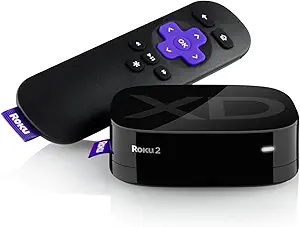
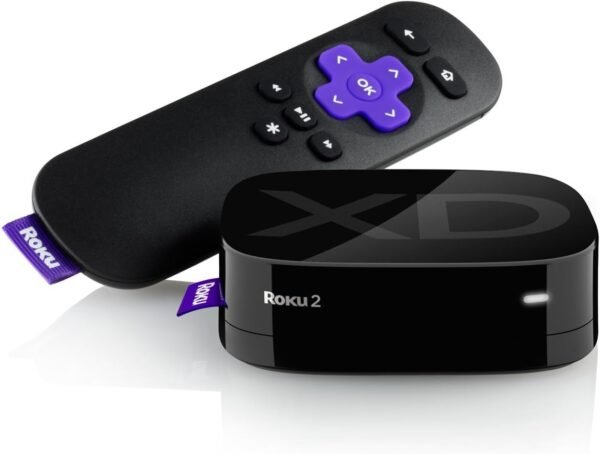
The Roku 2 XD, model 3050X, is a streaming media player from an earlier generation of Roku hardware. It plugs into a television over HDMI, connects to a home network wirelessly, and presents streaming channels through Roku’s interface. The listing states that a remote and an HDMI cable are included, which was not universal at the time.
The specification list is short because the listing is short. Roku states high definition streaming up to 1080p, built in wireless on the 802.11 b, g and n standards, more than 600 channels, and a free companion app for iOS and Android. The record gives a purple color, a first availability date of October 18, 2013, and exactly one customer rating at 5.0 stars, which is not a usable signal of anything.
Anyone shopping for a current streaming player should read the Formuler Z10 SE or the BuzzTV X5 instead, both of which output 4K.
Age Is the Story Here
What the Service List Tells You
The most informative thing in this listing is the list of streaming services Roku names: Netflix, Hulu Plus, Amazon’s video service under its former name, HBO GO and VUDU. Read that list carefully, because it is a snapshot of a moment that has passed.
Hulu Plus was the paid tier of Hulu and the name was retired years ago. Amazon’s service has since been renamed. HBO GO was the authenticated cable companion service and it was discontinued entirely. VUDU has changed ownership and branding. None of that is Roku’s fault, and none of it means the device stopped working the day a service was renamed. It does mean that a listing written around a 2013 service landscape cannot tell you what will run on the device today.
Why That Matters Generally
This is the single most important thing to understand about any streaming device, and this listing illustrates it better than a current product could. Which apps run on a streaming player, and whether they run at full quality, is decided by the streaming services and by the platform owner, not by the hardware manufacturer. Services drop support for older devices when their app requirements outgrow the hardware, when content protection standards change, or when maintaining an old build stops being worthwhile.
Roku has historically supported its hardware well and for a long time, better than most manufacturers in this category. But a player from 2013 is a decade past its release, and anyone buying one should verify that the specific services they care about still support this model before purchasing. The listing cannot answer that question and neither can this review.
What Still Works and What Does Not
It is worth separating two questions that often get merged. The first is whether the hardware still functions, and there is no reason to think it does not: a device like this has no moving parts and its failure modes are the power supply and the wireless radio. The second is whether the software ecosystem around it still functions, and that is entirely outside the owner’s control. A player can be in full working order and still show an error when a service withdraws its app. Buying older streaming hardware means accepting that the second question can be answered by someone else at any time, which is a different kind of risk from a device simply wearing out.
Resolution and Connectivity
Maximum output is 1080p. There is no 4K support and no HDR support of any kind, which is consistent with the era. For a 1080p television that is not a limitation at all. For a 4K set it means the player is the bottleneck, and content will be upscaled by the television rather than delivered at native resolution. Buyers pairing a player with a 4K panel such as the TCL 55S421 are better served by a 4K capable device.
Wireless is 802.11 b, g and n. The b and g standards are long obsolete and n, now retrospectively called Wi-Fi 4, is two generations behind current hardware. For 1080p streaming that is adequate, since 1080p streams typically need well under 10 megabits per second. On a congested modern home network it will be the slowest device present.
No Ethernet port is mentioned in this listing, no port list is given, no dimensions and no weight are published.
Highlights
- Remote and HDMI cable included in the box.
- 1080p high definition output.
- Built in wireless, so no cable run is required.
- Free companion app for iOS and Android for control and search.
- Roku’s channel interface, which remains one of the simplest in the category.
- Compact enough to sit behind or beside a television without a shelf.
Things To Consider
- This is a 2013 catalog entry for hardware from an earlier generation. Age is the dominant consideration and everything else follows from it.
- Several named services no longer exist under those names. Hulu Plus, HBO GO and Amazon’s former video brand are all listed. Verify current app support for the services you actually use before buying.
- No 4K and no HDR. Maximum output is 1080p.
- 802.11 b, g and n wireless is several generations behind current standards.
- The listing says “Is Discontinued By Manufacturer: No.” That is not credible for a player of this generation and should be read as a stale field rather than as a statement about current production.
- Exactly one customer rating. A single five star rating carries no information at all.
- No dimensions, weight, port list or power specification is published anywhere in this record.
- The 600 channel figure is from 2013. Roku’s channel count has changed substantially since, in both directions, as channels launched and closed.
Who Should Buy It and Who Should Skip It
There is a narrow case for this player: a secondary 1080p television where you want Roku’s interface, you already know which services still support the hardware, and you are not paying for capability you will not get. Roku’s interface is genuinely good and it has aged better than most.
For almost everyone else, this is the wrong purchase. A current player gives you 4K, HDR, current wireless standards and app support that will not run out next year. The Kinhank G1 and the alternatives in the streaming media player category are the sensible comparison, and buying a modern television with a maintained platform built in removes the question entirely.