Description
What the Diamond X30A Is and Who It Suits
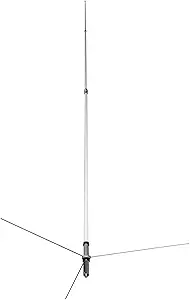
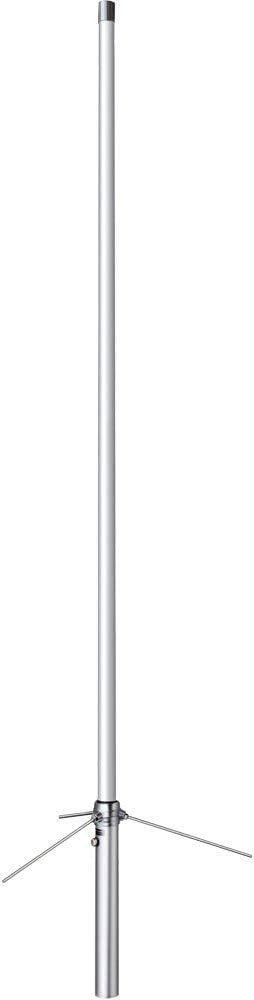
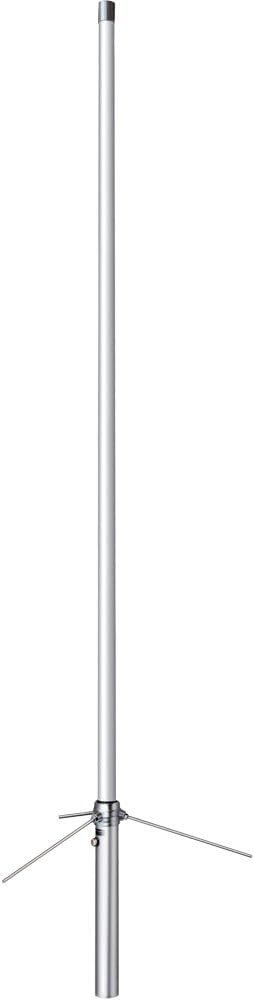
The Diamond Antenna X30A is a vertical dual band base and repeater antenna for the 2 meter and 70 centimeter amateur bands. It is a fiberglass radome design standing 4.5 feet, rated at 150 watts, terminating in a UHF female SO-239 connector. Diamond’s own positioning is unusually specific and worth quoting: these antennas “are designed for areas where height or antenna restrictions are an issue.” That is the buyer this product was drawn for, someone in a homeowners association, a rental, or a location where a tall mast is not going to be permitted or practical.
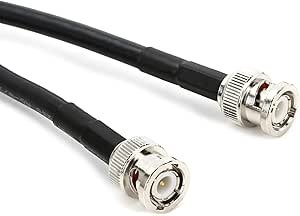
It is a fixed installation antenna, which distinguishes it from vehicle mounted designs such as the Comet CA-2X4SRNMO. A base antenna is mounted once, aligned vertically, fed with coaxial cable, and left alone. It has no mount included and no cable included according to this listing, both of which are separate purchases.
Construction and Electrical Specification
Radome and Hardware
Diamond lists a heavy duty fiberglass radome with stainless steel hardware. Fiberglass over the radiating element is the standard construction for a base antenna that has to live outdoors permanently, because it protects the element from ice loading, salt and ultraviolet exposure without affecting the radio frequency performance. Stainless hardware matters for the same reason: the mounting clamps are the part that fails first on a cheap antenna after a few winters.
The antenna is listed as DC grounded and factory adjusted with no tuning required. DC grounding provides a static discharge path, which is a meaningful benefit for an antenna sitting on a roof, though it is not a substitute for proper lightning protection at the feedline entry point. Factory adjustment means the antenna arrives at its designed match rather than requiring element trimming, which removes the most error prone step of a base antenna install.
Power Handling and Connector
The rating is 150 watts, which comfortably covers a typical amateur base station running 50 watts on 2 meters, and covers most VHF and UHF transceivers at full output. The connector is UHF female, the SO-239, which is the standard fitting on amateur VHF and UHF equipment and pairs with a PL-259 on the cable end. Nothing exotic is required to connect it, and no adapter should be necessary for a standard amateur station.
The SWR Caveat, Stated by the Manufacturer
Diamond is unusually candid on this point and the wording deserves attention: “While the antenna provides good performance across the 2M and 70 cm bands, please note that SWR may vary depending on your exact installation location and frequency. For optimal results, check the SWR values in your specific area of use.” That is a manufacturer telling buyers that the published match is not a promise about their roof. Standing wave ratio on a base antenna is affected by mounting height, proximity to the mast and the building, the feedline itself and nearby metal. Anyone installing this should own or borrow an SWR meter and check the match on the frequencies they actually use before transmitting at full power.
Height, Restrictions and Realistic Expectations
The stated 4.5 foot height is short for a base antenna, and that is the design intent rather than a shortfall. A shorter vertical is easier to hide, easier to mount on a short mast or a chimney bracket, and less visually obtrusive where restrictions apply. The tradeoff is that antenna performance at VHF and UHF is dominated by height above ground and clear line of sight far more than by the antenna itself. A modest antenna high and clear will usually outperform an excellent antenna low and surrounded by structure. Buyers should set expectations accordingly and should not read gain claims as a substitute for elevation.
The same physics applies to television reception antennas, where advertised range figures are routinely misread. Anyone shopping across both uses should read the Winegard FL5500A and Televes Ellipse reviews with the same skepticism about distance claims, and the radio antenna category collects the amateur focused options in one place.
Highlights
- Dual band 2 meter and 70 centimeter coverage from a single vertical antenna.
- 150 watt power rating, sufficient for typical amateur base station output.
- Heavy duty fiberglass radome with stainless steel hardware for outdoor life.
- Factory adjusted, so no element trimming or tuning is required on installation.
- DC grounded design providing a static discharge path.
- Compact 4.5 foot height suited to restricted or low visibility installations.
- Standard UHF female SO-239 connection requiring no adapter for typical amateur gear.
Things To Consider
- The dimension field disagrees with the stated height. The specification records 45.5 by 4 by 2 inches, which is 3.8 feet, while the feature bullet states 4.5 feet. The 45.5 inch figure is most likely the shipping carton. The listing gives the length two different ways and neither should be treated as final.
- No gain figure is published in this listing for either band. Diamond publishes gain figures for this model in its own documentation, but they do not appear in this data, and this review will not supply a number the listing does not contain.
- No mounting hardware, mast or coaxial cable is listed as included. Budget for all three.
- SWR is explicitly location dependent by the manufacturer’s own statement. Plan to measure it after installation.
- Height above ground matters more than the antenna. A short vertical at eave level will not perform like the same antenna on a mast, and no product specification changes that.
- A license is required to transmit on the 2 meter and 70 centimeter bands in the United States. Receiving is unrestricted.
- Weight is listed at 2.1 pounds, which is plausible for a fiberglass vertical of this size, but no wind loading figure accompanies the “high wind rating” claim.
Who Should Buy It and Who Should Skip It
The X30A suits a licensed operator setting up a fixed dual band station in a location where a tall antenna is not an option, who wants a known manufacturer, factory adjusted hardware and outdoor grade construction rather than an unbranded vertical. The 178 customer ratings averaging 4.7 stars at the time this data was captured put it among the better regarded compact base antennas, and Diamond’s own honesty about SWR variation is a good sign about the company rather than a warning about the product.
Skip it if you have the space and permission for a taller antenna, because height will buy more real world performance than this antenna’s compact form allows. Skip it also if you need a mobile installation, where an NMO mounted whip such as the Tram 1180 or the Yaesu ATAS-120A is the right category of product.