
Description
What the Sony KD32W830K Is and Who It Suits
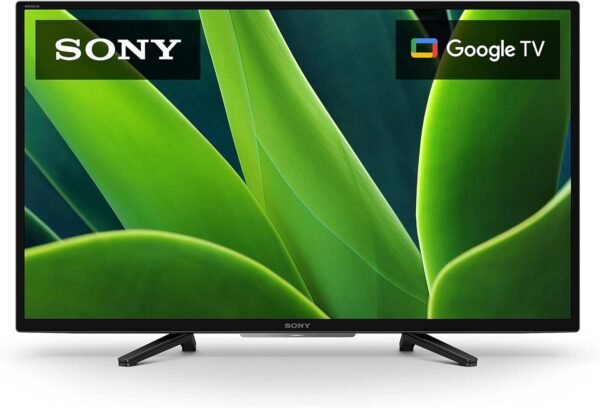
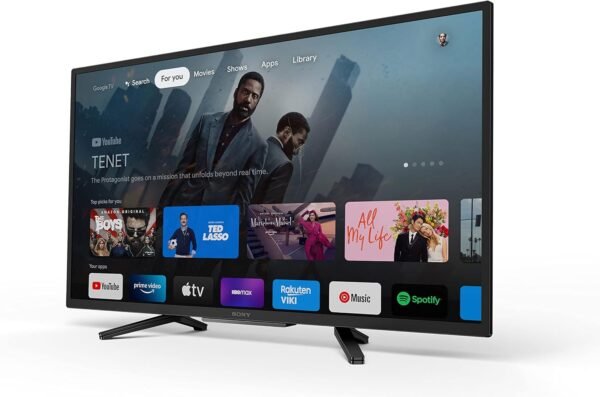
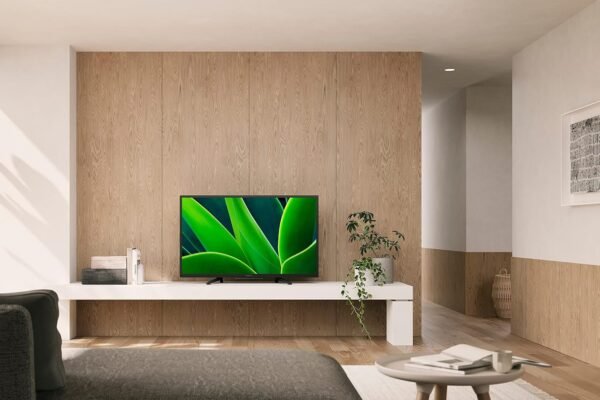
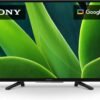
The Sony KD32W830K belongs to the W830K series, a 2022 model that Sony positions at the small end of its television range. The listing describes it as a 32 inch LED HDR television with Google TV built in, finished in black, with a standing screen display size of 32 inches and a 16:9 aspect ratio. That combination places it in a specific slot rather than a general purpose one. It is a secondary set: a bedroom, a kitchen counter, a home office, a guest room, a dorm, or a small apartment where a 55 inch panel would simply not fit on the wall or the credenza.
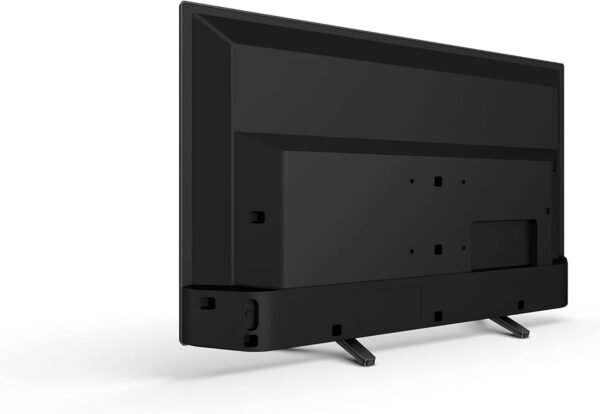
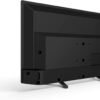
Sony records the shipping weight at 11.1 pounds and the product dimensions at 28.75 by 7.5 by 18.38 inches, which is light enough that one person can lift it onto a stand or a wall bracket without help. The remote takes two AAA batteries and the listing says they are included. Country of origin is given as Vietnam, and the record shows a first availability date of July 4, 2022, with 346 customer ratings at an average of 4.3 stars at the time this data was captured.
Picture Quality: Read the Resolution Carefully
Native Resolution and Panel Type
This is the single most important thing to understand before buying. The KD32W830K is a 720p HD set, not a 1080p set and certainly not 4K. Sony states this plainly in its own feature bullet, which reads “Enjoy TV in crystal-clear 720p HD resolution.” The panel is an LED backlit LCD, which is the standard construction for a television at this screen size. It is not an OLED and it is not a QLED, and those three terms describe genuinely different display technologies rather than tiers of the same one. If you want a self emissive panel with per pixel black levels, the site covers those separately in reviews such as the Sony BRAVIA XR A80L OLED, which sits in a completely different price and technology bracket.
At 32 inches and normal seating distance, a 720p panel is less of a compromise than the number suggests, because pixel density at that diagonal is reasonable. It becomes a real limitation if you plan to sit close, use the set as a computer monitor, or feed it native 4K content that you actually want to see resolved. For a 32 inch set with a higher native resolution, the site also covers the TCL 32S327 and the Hisense 32A4NR, and the wider LED and LCD TV category covers larger panels in the same family.
HDR Support and Processing
The specification sheet lists HDR10 and HLG as the supported high dynamic range formats. It does not list Dolby Vision, and it does not list HDR10+. HDR10 is the baseline open format that nearly all streaming services carry, and HLG is the broadcast oriented format used by some over the air and satellite HDR channels. Sony also lists X-Reality PRO, its upscaling and noise reduction engine, and a Dynamic Contrast Enhancer. Note that X-Reality PRO appears twice in the Special Features field, which reads as a data entry duplication rather than two separate features.
Sony does not publish a peak brightness figure or a contrast ratio in this listing, and no responsible reading of the data can supply one. HDR on a small, edge lit LED set is generally about format compatibility rather than the specular highlight performance that larger, brighter panels deliver, so treat the HDR badge as a compatibility statement rather than a picture quality promise.
Motion
The bullets reference Motionflow XR for motion handling. Motionflow XR is a marketing motion label, not the panel’s native refresh rate, and the listing does not publish a native refresh rate anywhere. Sony’s own bullet phrases it as blur reduction for sports and action rather than as a panel specification. Buyers who care specifically about native 120Hz panels for gaming should treat this set as unspecified on that point and confirm with Sony directly.
Google TV, Apps and Voice Control
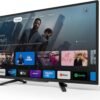
Google TV with Google Assistant is the built in platform. Sony’s bullet lists Netflix, Disney+, Apple TV, HBO Max, Amazon Prime Video and Peacock among the services it aggregates, and Google TV presents recommendations across those apps in one row based interface rather than making you open each app separately. Voice search runs through Google Assistant on the remote. The listing also states the set works with Alexa, but reads it carefully: the wording is “Through an Alexa enabled device,” meaning you supply a separate Echo or similar speaker and use it to change channels, adjust volume and power the television on or off. There is no Alexa microphone in the television itself according to this data.
Streaming platform behavior is worth setting expectations on. App availability, app versions and service catalogs change over time, and those changes sit with the service operators and with Google rather than with Sony. A television bought for one specific app should be checked against that app’s current device support list before purchase, and the same caution applies to the standalone players covered in the Roku 2 XD review.
Highlights
- 32 inch LED backlit LCD panel with a 16:9 aspect ratio, sized for rooms where a large television will not fit.
- Google TV with Google Assistant built in, aggregating major streaming services in one interface.
- HDR10 and HLG format support listed by Sony, plus X-Reality PRO upscaling and noise reduction.
- Dolby Audio listed for the built in sound processing.
- Light at a listed 11.1 pounds, which simplifies wall mounting and moving the set between rooms.
- Remote batteries included, so the set is usable out of the box.
- Compatible with an existing Alexa speaker for basic voice commands.
Things To Consider
- 720p, not 1080p or 4K. This is the defining limitation. Anyone shopping on resolution alone should look at a different set.
- The voltage field is a data fault. The specification sheet records 240 volts. A television sold for the United States market runs on standard 120 volt household power. Read the 240 volt entry as an import data error rather than as a reason to buy a transformer, and confirm the electrical rating on the unit’s own label when it arrives.
- The wattage field reads “6E+1.” That is a spreadsheet exponent artifact for 60, not a real specification format. It suggests roughly 60 watts, but the listing does not state it cleanly, so treat power draw as unpublished.
- No native refresh rate is published. Motionflow XR is not a substitute for that number.
- No port count is published. The listing does not state how many HDMI or USB inputs the set carries, so anyone with several devices to connect should verify before buying.
- No peak brightness or contrast figure is published. Any specific nit number attached to this model elsewhere did not come from this listing.
Who Should Buy It and Who Should Skip It
Buy the KD32W830K if you want a compact, light, name brand television with a modern smart platform for a room where screen size is capped by the furniture rather than by the budget, and where the content you watch is mostly streamed at standard definition or HD. Google TV is a genuinely capable platform, the HDR format list covers the mainstream case, and Sony’s processing reputation is the reason to pick this over an unbranded panel of the same size.
Skip it if resolution matters to you, if the set will double as a monitor, if you need documented gaming specifications such as native refresh rate or variable refresh rate support, or if you are shopping for a main living room television. In that last case the sensible move is to step up in size and resolution rather than to buy a small panel and regret it, and the category pages here cover those larger options in detail.