
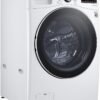
Description
LG 5.0 cubic foot front load washer: what the title says, and what the listing does not
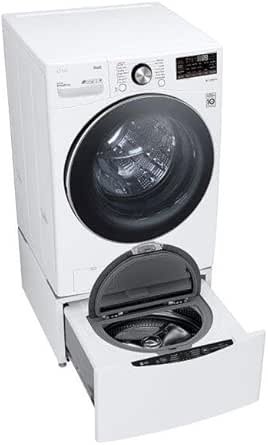
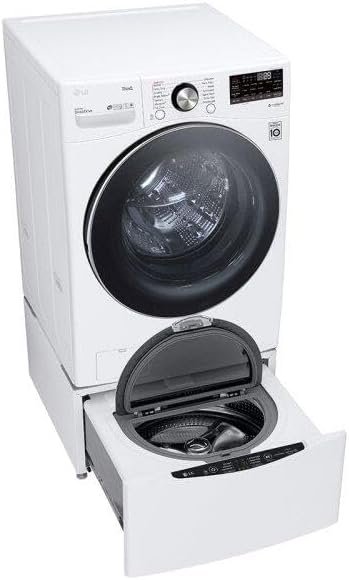
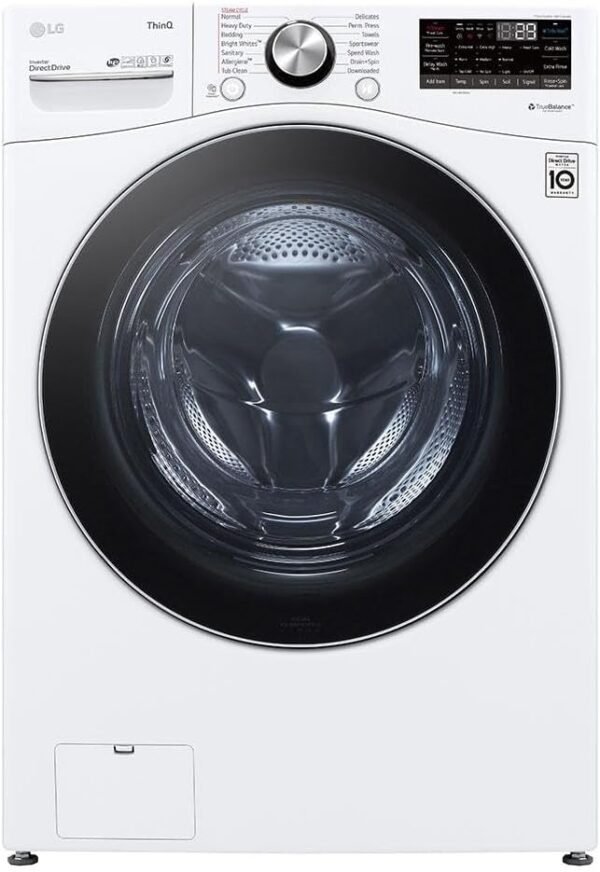
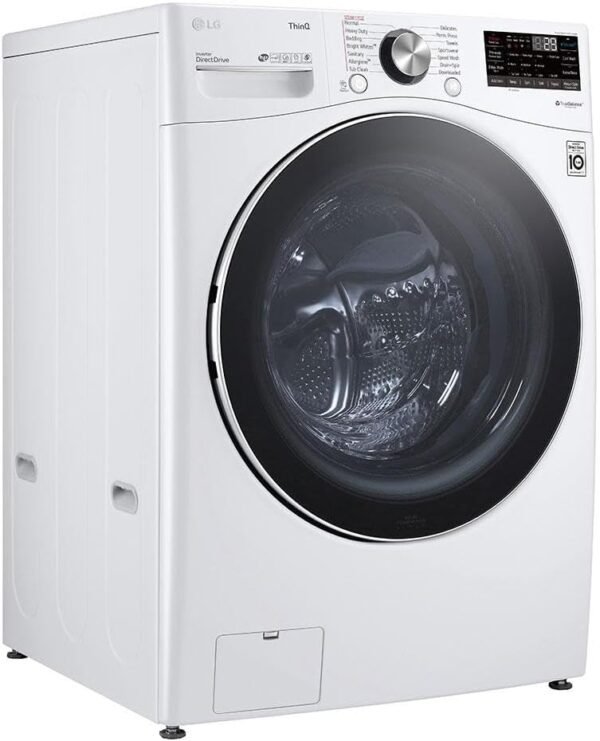
This listing covers an LG front load washer described as a 5.0 cubic foot mega capacity smart Wi-Fi enabled machine with TurboWash 360 and Built In Intelligence. That sentence is the entire published specification. The listing carries no specification block, no manufacturer description, no feature bullets, no dimensions, no weight, no spin speed, no cycle list, no energy or water certification, and, most significantly for a laundry appliance, no model number.
LG sells several washers that match that title across different model years, and they differ in spin speed, cycle selection, noise reduction hardware and certification. Without a model number there is no way to determine from this listing which one is in the box. This review sets out what each named feature means, and then sets out exactly what to confirm before ordering, because on a washer those unpublished figures decide whether the machine fits the room and how it performs.
Five cubic feet is a large drum, and that has consequences
Five cubic feet puts this at the large end of residential front loaders. In practical terms that is a comforter, a full set of bedding, or roughly three normal loads consolidated into one. Households that currently run laundry four or five times a week are the ones who benefit, because the saving is in cycles started rather than in time per cycle.
Two consequences follow that buyers routinely underestimate. A large drum is heavier and deeper than a standard one, so door swing clearance and the depth from the back wall to the closed door become real constraints in a closet installation. And a large drum only saves time if the matching dryer can handle what comes out of it. Pairing a five cubic foot washer with a small dryer means splitting every large load in two at the dryer, which cancels the benefit. Anyone building a pair should size the dryer first, whether that is an Amana NED4655EW or something larger from the dryers section.
TurboWash 360, in LG’s own terms
TurboWash 360 is LG’s name for a system that sprays wash water onto the load from multiple nozzle positions rather than relying on the drum tumbling clothes through a pool of water at the bottom. LG’s stated purpose is to saturate the load faster and shorten cycle times without dropping cleaning performance. That is the manufacturer’s description of the mechanism and of its intent. This site does not run laundry tests, so no cycle time or cleaning result is claimed here. What can be said is that the mechanism is real hardware rather than a software mode, and that on LG’s model pages the time saving is quoted per cycle and varies by cycle, which is worth reading before treating a headline figure as typical.
Built In Intelligence and the Wi-Fi connection
Built In Intelligence is LG’s term for load sensing that adjusts the wash motion and cycle settings based on what the machine detects about load weight and fabric softness. Again, that is the manufacturer’s description. The useful framing for a buyer is that it reduces the number of decisions at the control panel, not that it eliminates the need to sort a wash properly.
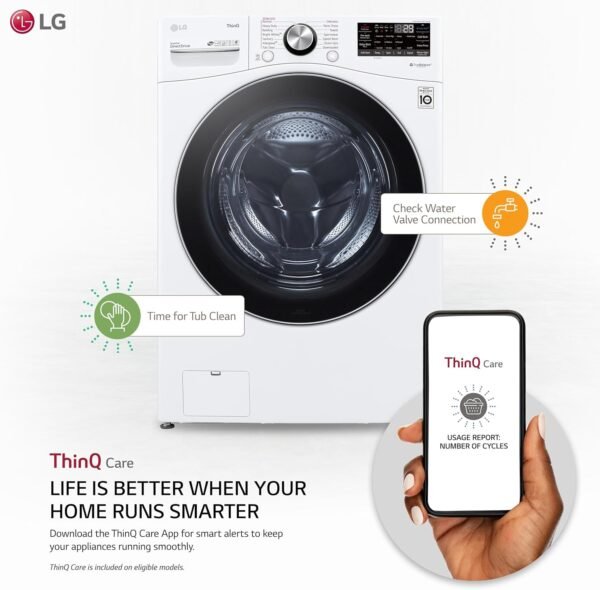
The Wi-Fi side allows remote start, cycle monitoring and notifications through LG’s app. Two honest caveats belong with any connected appliance. The feature depends on the manufacturer’s app and servers continuing to be supported, which is a commitment rather than a component. And remote start on a washer still requires someone to have loaded it, so the practical benefit is mostly notification when a cycle ends, which matters because clothes left sitting in a front loader develop odor faster than in a top loader.
The seven things this listing does not tell you
Because the data block is empty, the checklist below is the whole job before ordering.
Model number. Get it from the seller. Everything else follows from it, including parts, service documentation and warranty registration.
Exterior dimensions and depth with the door open. Front loaders are commonly around 27 inches wide, but depth varies a lot and the open door adds substantially to it. Measure the room, not just the alcove.
Maximum spin speed. This is the single number that determines how wet clothes are when they reach the dryer, and it drives drying time and energy use more than any dryer setting does.
Energy Star and water use. Neither is claimed in the listing. Do not assume a certification the seller did not state.
Stacking compatibility. Whether a stacking kit exists for the specific model and whether the intended dryer is a match.
Installation requirements. Hot and cold connections, drain height, and whether the outlet is a standard 120 volt circuit.
Warranty terms. Length, and whether the drive motor and drum are covered separately, which is common on front loaders.
How it compares within this catalog
The GE GFW850SPNRS is the closest comparison here as another large capacity front loader, and the Samsung WD53DBA900HZ represents the combined washer and dryer approach for homes without a vent. At the simpler end, the Amana NTW4519JW is a conventional top loader with no app, no sensing and far fewer things to go wrong. Front loaders and top loaders sit together under washers.
The general trade off is worth stating: front loaders use less water and spin faster, so they cost less to run and leave less work for the dryer, but they need the door left ajar between washes and a periodic tub clean to avoid odor. Top loaders are more forgiving of neglect and cheaper to buy, and they wring out less water.
Who it suits
A five cubic foot connected front loader suits a busy household with a dedicated laundry room, a matched large dryer, and a preference for fewer, larger loads. The features named in the title are the ones that make that pattern work.
Anyone in a tight closet installation, anyone unwilling to maintain a front loader’s door seal and drum, or anyone who wants a machine with no app involvement should look elsewhere. And regardless of preference, nobody should order this particular listing without getting the model number and the spin speed in writing first.


