Description
What the Yaesu ATAS-120A Is
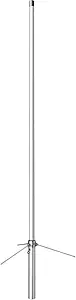
The Yaesu ATAS-120A is an automatically tuning motorized mobile antenna covering from the 40 meter amateur band up to 70 centimeters, which Yaesu states as 40 meters through 450 MHz. It is a two piece design: a motorized lower coil section topped with a stainless steel whip, extending to a maximum of roughly 5 feet. The base thread is PL-259 style, which mates with a standard SO-239 mobile mount.
What makes it unusual is the tuning mechanism. Yaesu describes a motorized “trombone” section that lengthens and shortens the antenna automatically when the tune button on a compatible radio is pressed. The radio sends a tune signal, the antenna physically changes its own electrical length to match, and the operator does nothing. On the HF bands, where a fixed length whip is only resonant on one band, that is a substantial convenience and it is the entire reason this product exists.
The record shows 69 customer ratings averaging 4.6 stars at the time this data was captured and a first availability date of March 31, 2011. That is a long production run, which for amateur radio equipment usually indicates a design that works.
Compatibility: Read This Before Buying
This is the most important section of this review, because the ATAS-120A is not a general purpose antenna. Yaesu states plainly, in capital letters in its own bullet, that it is “For Listed Yaesu models ONLY.”
The listed radios are the FT-857, FT-857D, FT-450D, FT-450AT, FT-991, FT-991A, FT-450, FT-100D, FT-100, FT-891, FT-710, FT-897 and FT-897D. Yaesu adds “and possibly others, check your Yaesu Owner’s manual for compatibility,” which is a fair statement rather than a hedge: the tuning protocol is proprietary to Yaesu and only radios that implement it can drive the antenna’s motor.
Put plainly, if you own an Icom or a Kenwood, this antenna will not auto tune with it. That does not make the antenna faulty, it makes it the wrong purchase. Operators with other brands should look at fixed dual band designs such as the Comet CA-2X4SRNMO or the mount included packages in the radio antenna category.
Installation Requirements
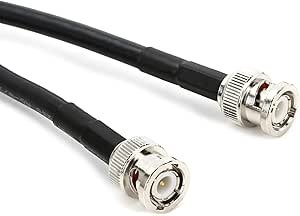
Yaesu is direct about what is not in the box. The antenna requires an optional SO-239 thread mobile mount and coaxial cable, neither of which is included. That means a hole mount, a lip mount or a magnetic mount with the correct thread has to be bought separately along with a cable assembly.
Two practical points follow. First, a motorized HF antenna is heavier and taller than a simple VHF whip, so the mount has to be mechanically adequate rather than merely available. Second, HF mobile performance depends enormously on the ground plane and on the vehicle body being electrically bonded, and no antenna specification changes that. Operators moving from a fixed station to a mobile installation should expect a different performance picture regardless of what they mount.
For a fixed location, a base antenna such as the Diamond X30A is a different and more appropriate category of product.
How Automatic Tuning Changes Mobile HF Operation
It is worth being concrete about the problem this antenna solves. A fixed length whip is electrically resonant on one band. To work a different band, an operator either carries several whips and swaps them at the roadside, adds a manually adjusted loading coil, or runs an antenna tuner that forces a match at the cost of efficiency in the feedline. None of those is convenient in a moving vehicle, and all of them mean stopping.
A motorized antenna changes its own physical length instead, which alters resonance at the antenna itself rather than compensating for a mismatch further back. Pressing the tune button on a compatible radio starts that process and the antenna reports back when it settles. The operator changes band and carries on. That is the single feature buyers are paying for, and it is why compatibility with the radio matters more here than any other specification.
Highlights
- Automatic motorized tuning driven by the radio’s own tune button.
- Very wide frequency coverage from 40 meters through 450 MHz in one antenna.
- Two piece design with a motorized coil section and a stainless steel whip.
- Maximum extended length of approximately 5 feet, which is compact for HF coverage.
- Standard PL-259 style base thread mating with common SO-239 mobile mounts.
- A long production history dating to 2011, with a 4.6 star average from 69 ratings.
- Removes the need to carry and swap band specific whips.
Things To Consider
- Yaesu radios only. This is a compatibility constraint, not a preference. Check the listed models against your transceiver before ordering.
- No mount and no coaxial cable are included. Both are required and both are additional purchases.
- The weight field reads 0.01 ounces. That is impossible for a motorized antenna assembly and is a clear data fault. Do not use it for mount load planning. The same absurd value appears on other antenna listings in this catalog, which suggests a systematic import problem rather than a one off error.
- The dimension figures and the stated length disagree. The specification records 37.3 inches while the bullet states approximately 5 feet fully extended. Both can be true for a telescoping design, retracted and extended, but the listing does not say which is which.
- No power rating is published. For an antenna intended for HF mobile use, the maximum power handling is a specification a buyer needs and it does not appear anywhere in this record.
- No gain figures and no VSWR data are published for any band.
- A short HF antenna is a compromise. Five feet is very short for 40 meters, and efficiency at the lower bands on any antenna of this length is limited by physics rather than by design quality. This is a convenience product for mobile operation, not a substitute for a full size antenna.
- Transmitting requires an amateur license.
Who Should Buy It and Who Should Skip It
Buy the ATAS-120A if you own one of the listed Yaesu transceivers and want HF mobile operation without stopping to change antennas for each band. The automatic tuning genuinely removes the biggest practical obstacle to mobile HF work, and the 4.6 star average across a decade of availability suggests the mechanism holds up.
Skip it if you run a different brand of radio, if you want a base station antenna, or if you need documented power handling before buying. Mobile operators on VHF and UHF only will be better served by a simpler dual band whip such as the Tram 1180 or the Tram 1481, both of which involve far less complexity and have nothing to fail mechanically.