

Description
What the Comet CA-2X4SRNMO Is
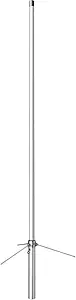
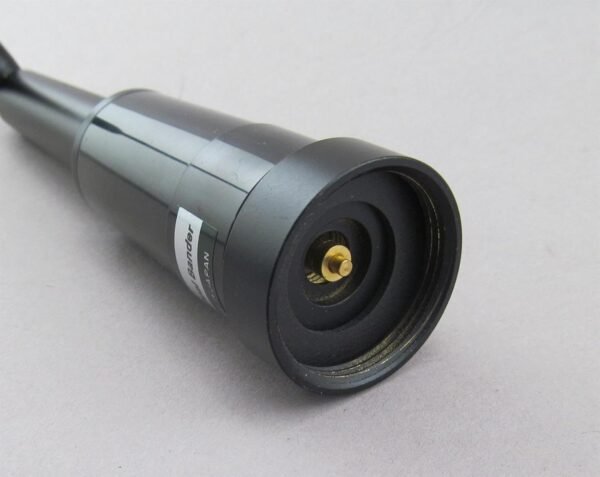
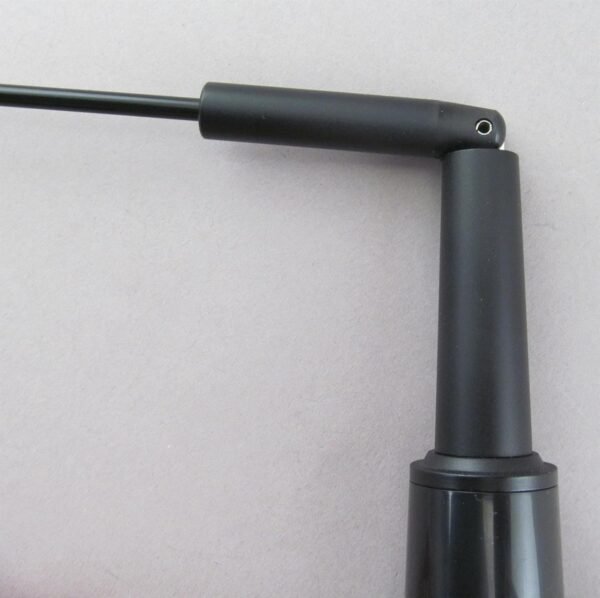
The Comet CA-2X4SRNMO is a dual band vertical mobile antenna built for the 2 meter and 70 centimeter amateur radio bands, which the listing gives as 144 and 440 MHz. It uses an NMO mount, the standard threadless mount found on commercial and public safety vehicle installations, and Comet describes it as a broadband design intended for voice communications across ham, land mobile and FRS frequency ranges. The manufacturer also positions it as an antenna used by search and rescue volunteers, which tells you the design brief: reliability on a moving vehicle, not maximum gain on a bench.
Comet lists it as made in Japan, with a one year warranty, first available December 3, 2013, and 65 customer ratings averaging 4.6 stars at the time this data was captured. It is a mobile antenna, meaning it mounts to a vehicle, and it is not the same category of product as a base station antenna like the Diamond X30A, which is designed to sit on a mast at a fixed location.
Dual Band Operation and What It Actually Means
Transmit and Receive on Both Bands
The important line in Comet’s description is that the CA-2X4SR series antennas “allow for TX and RX capability in both bands.” Plenty of inexpensive dual band whips are optimized for one band and merely tolerate the other. A design that is specified for transmit on both 144 and 440 MHz is doing more work, because the antenna has to present a usable impedance match at two widely separated frequencies rather than one. That is the core value here for an operator who works both bands from the same vehicle.
Coverage and Gain
Comet describes the antenna as offering “remarkable coverage area and gain” without publishing a decibel figure for either band in this listing. That absence is worth stating plainly rather than filling. Antenna gain figures are quoted against different references, dBi and dBd differ by 2.15 dB, and a manufacturer claim without a reference is not a number you can compare against a competitor. If gain on a specific band is the deciding factor for your installation, ask Comet for the published pattern rather than relying on the marketing sentence.
Radio Compatibility
The bullets state compatibility with Yaesu, Icom and Kenwood radios. In practice an antenna is compatible with any radio that puts out the right frequency into the right impedance, so read this as confirmation that the connector and band coverage suit mainstream amateur mobile rigs rather than as an exclusive list. What actually needs checking on your side is the mount and the cable end, because NMO mounts terminate in several different connector types depending on the cable assembly you buy.
Mounting: the NMO Standard
NMO is the mount type used across commercial vehicle radio installations, and it is the reason this antenna appears in fleet and volunteer service contexts. An NMO mount requires a hole in the vehicle body, or a magnetic or lip mount NMO base bought separately. The antenna itself is only the whip and the base thread. Nothing in this listing indicates that a mount, a cable or a magnetic base is included, and the “What’s In The Box” field is empty, so budget for the mount hardware and coaxial cable as separate purchases.
Ground plane matters here as well. A vertical mobile antenna on the amateur VHF and UHF bands relies on the vehicle roof acting as a ground plane. Mounting on a fiberglass roof, a trunk lid edge, or a mirror bracket changes the pattern and the match. Operators dealing with that constraint often end up with a mirror mount design such as the Stryker SR-A10, which is engineered around the compromise rather than fighting it.
Highlights
- Dual band 144 and 440 MHz coverage with transmit and receive specified on both bands.
- NMO mount, the standard for commercial and public safety vehicle installations.
- Stated compatibility with Yaesu, Icom and Kenwood mobile radios.
- Made in Japan with a stated one year warranty from Comet.
- Broadband design covering ham, land mobile and FRS ranges according to the manufacturer.
- A well established model in the catalog, first listed in December 2013.
Things To Consider
- The published dimensions are not credible as antenna dimensions. The listing gives “40 x 2 x 40 inches.” A vertical whip has one meaningful length, not two 40 inch axes. This is almost certainly shipping carton data, and the actual radiating length is not stated anywhere in the listing.
- The weight field reads 0.01 ounces. That is impossible for a metal whip antenna and is a clear data fault rather than a light design. Do not use it for shipping or mount load planning.
- No gain figure, no power rating, no VSWR specification is published here. For an antenna, those are the three numbers that matter most, and none of them appear in this data. Anyone matching the antenna to a specific radio’s output power should get those from Comet directly.
- No mount, cable or connector is listed as included. Plan on buying an NMO base and coaxial assembly separately.
- Installation requires drilling or a separate base. This is not a plug and play accessory, and a poor mount will undo the quality of the antenna.
- Amateur transmit privileges require a license. Receiving is unrestricted, transmitting on the 2 meter and 70 centimeter bands in the United States is not.
Who Should Buy It and Who Should Skip It
This antenna suits a licensed operator putting a dual band mobile rig into a vehicle with a metal roof, who wants a known Japanese manufacturer rather than an unbranded whip, and who already understands NMO mounting or is willing to learn it. The transmit specification on both bands is the reason to choose it over a bargain dual band whip, and the search and rescue positioning reflects a design meant to survive weather and vibration.
Skip it if you want a base station antenna for a fixed location, in which case the Yaesu ATAS-120A and the other designs in the radio antenna category address different installations, or if you want a plug in solution with the mount included, in which case a magnetic mount package such as the Tram 1180 is a simpler starting point.