Description
What the Le Creuset stoneware French press is
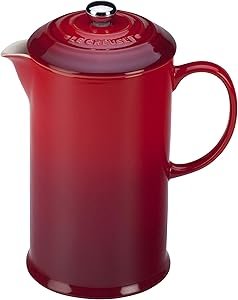
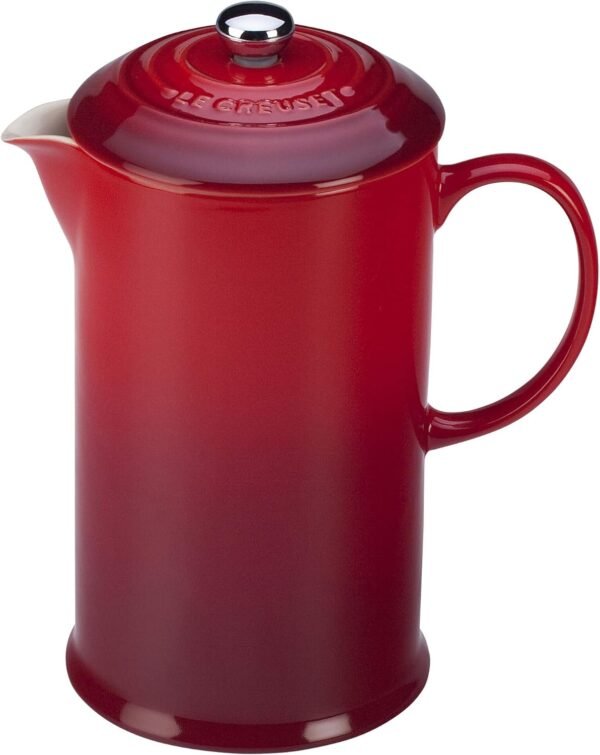
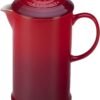
This is a French press with the usual mechanism and an unusual body. Coarsely ground coffee steeps in hot water, then a mesh plunger is pushed down to separate the grounds from the liquid. What differs here is that the carafe is Le Creuset stoneware in the company’s Cerise finish rather than the glass or double walled steel used almost everywhere else.
Capacity is 34 ounces, which is roughly four cups of coffee. Published dimensions are 6.5 inches square by 8.5 inches high and the weight is 3 pounds empty. The model number is PG8200CB-1067 and the listing dates back to February 2012.
Stoneware brings two properties that matter for coffee. It holds heat far better than glass, so a brew stays hot through a longer steep and through second cups. And it is opaque and heavy, which makes it a serving vessel rather than a piece of laboratory glassware. The glaze is nonporous and non reactive, so it does not absorb coffee oils or take on flavors from previous brews, and Le Creuset states it resists chips, scratches and stains and is safe with metal utensils.
Brewing, and one correction
Le Creuset’s own description says the grounds are steeped in boiling water. That is the traditional shorthand and it is not quite right. Water at a full boil, 212 degrees Fahrenheit, extracts bitter compounds that water slightly below it does not. Most brewing guidance puts the target somewhere around 195 to 205 degrees, which in practice means letting a kettle stand for thirty seconds to a minute after it boils, or using a temperature controlled kettle such as the Fellow Corvo EKG Pro and setting it directly.
The rest of French press technique is straightforward and unchanged by the material: a coarse grind so the mesh can hold it back, a steep of around four minutes, and a slow steady plunge rather than a hard shove. Pushing the plunger down quickly forces fine particles through the mesh and stirs the bed, which produces a muddier cup.
A metal mesh filter lets coffee oils and some fine sediment through, which is what gives French press coffee its heavier body compared with a paper filtered brew such as the Hario V60. That is the point of the method rather than a defect. The listing also notes the press works with loose tea leaves, which it does, though tea generally wants a shorter steep and a lower temperature.
The stoneware claims, read carefully
Le Creuset lists the stoneware as safe for the freezer, oven, microwave, broiler, dishwasher and metal utensils. That is an impressive list and it deserves one qualification the listing does not give: those claims describe the stoneware carafe. A French press is not only stoneware. The plunger assembly, the mesh screen and the lid frame are metal, and nothing in the listing states that the assembled press can go in an oven or a microwave.
The sensible reading is that the carafe itself is that versatile, and the assembled press should be treated as dishwasher safe and nothing more. Anyone planning to put the body in an oven should remove the plunger first.
The other thing to weigh is what stoneware costs you. It is opaque, so the brew level and the color of the coffee cannot be seen, which matters more than it sounds when judging a steep. It is heavy at 3 pounds empty and considerably more when full. And while the glaze resists chipping, stoneware is ceramic: dropped on a tile floor it will break, where a stainless steel press would not.
Capacity and how it is used
Thirty four ounces is a middle size for a French press. It is roughly four small cups or two generous mugs, which suits a couple at breakfast or one person who wants a second cup without brewing again. It is not enough for a table of four, and the smaller the press, the faster it loses heat, which is where the stoneware earns its place.
The one habit a French press demands is decanting. Coffee left standing on the grounds after plunging keeps extracting, and within fifteen or twenty minutes it turns harsh. Pouring the whole brew into cups or a separate vessel once it is plunged solves it. That is easier to forget with an opaque carafe, since there is no visual reminder that coffee is still sitting on a bed of grounds.
Highlights
- Stoneware carafe with markedly better heat retention than glass.
- 34 ounce capacity, roughly four cups.
- Nonporous, non reactive glaze that does not absorb oils or odors.
- Resistant to chips, scratches and stains, and rated for metal utensils.
- Reusable mesh filter with no paper filters to buy.
- Dishwasher safe.
- Works with loose leaf tea as well as coffee.
- Doubles as a serving vessel rather than needing to be poured off.
Things To Consider
- The oven, broiler, microwave and freezer claims describe the stoneware. The assembled press includes metal parts.
- Stoneware is opaque, so the brew level and color cannot be seen while steeping.
- Three pounds empty is heavy, and considerably heavier full.
- Ceramic will break if dropped, unlike a steel press.
- Le Creuset’s description says boiling water. Water just off the boil produces a less bitter cup.
- Metal mesh lets fine sediment through, which is inherent to the method.
- Coffee left sitting on the grounds continues extracting and turns bitter. Decant it if it is not being drunk immediately.
- The attribute table lists the human interface input as a dial and the recommended use as cooking, neither of which describes a French press.
Who it suits
This suits someone who brews French press coffee at a table rather than at a counter, wants it to stay hot through a second cup, and values the piece as an object as much as an appliance. The heat retention is a genuine functional advantage over glass, and the glaze means it will look the same in five years as it does on the first day.
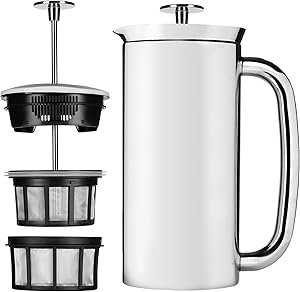
It is not for anyone who wants to watch the brew, who needs something light and unbreakable, or who wants a clean, sediment free cup. Buyers who want insulation without ceramic should read the ESPRO P7 in the french presses category. Those who prefer a cleaner cup should look at the pour over coffee makers category, and anyone drinking coffee cold should compare the Takeya cold brew maker.