
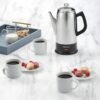
Description
Cuisinart PRC-12N Classic 12-Cup Percolator: what it is
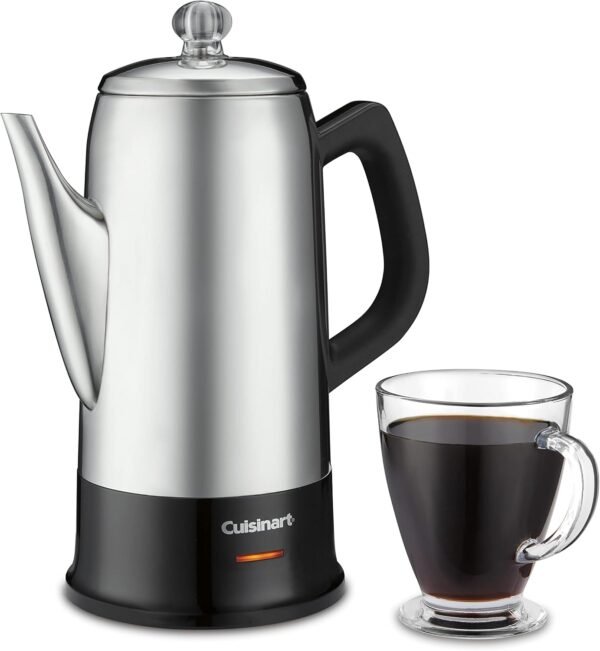
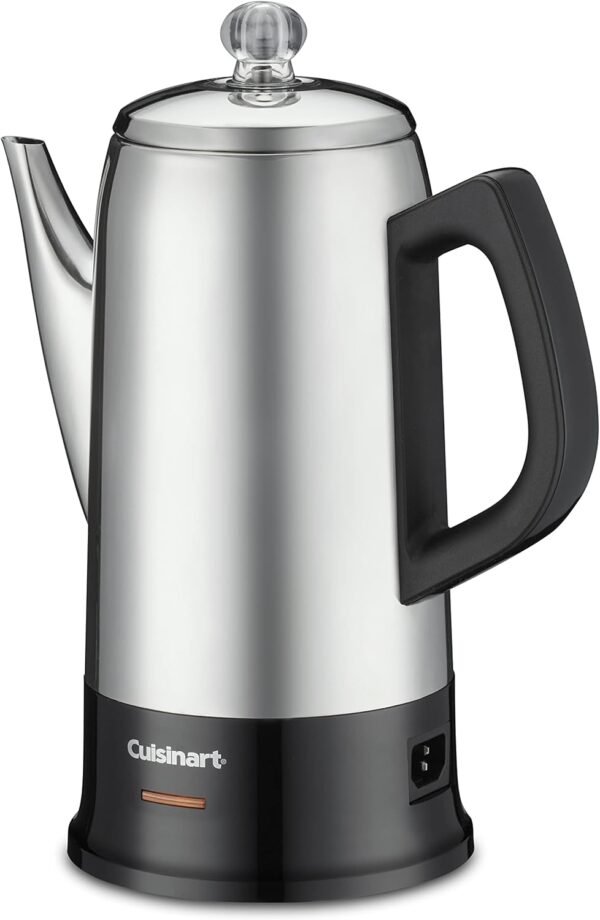
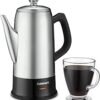
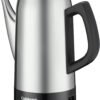
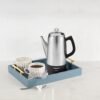
The PRC-12N is an electric stainless steel percolator with a 12 cup capacity. Cuisinart’s description is clear about what it does: hot water is percolated up through the coffee grounds and into a transparent knob on the top of the lid, producing the bubbling sound the format is known for. The removable stainless steel basket carries measurement markings for dosing grounds, and the body has an ergonomic handle, a knuckle guard and a no drip spout. The listing records dimensions of 6.25 inches deep by 9.25 inches wide by 12.25 inches high, a weight of 3 pounds, a reusable filter, and a first listed date of July 2022. It carries 333 customer ratings averaging 4.2 stars.
How percolation differs from drip, and why it matters to the cup
This is not a small stylistic difference and anyone choosing between the two should understand it before buying.
A drip machine passes water through the grounds once. Water is heated, it falls onto the coffee bed, it drains through into the carafe, and it never touches the grounds again. Contact time is short and controlled.
A percolator recirculates. Water is boiled at the base, forced up a central tube, sprayed over the grounds, and drains back down into the same water to be boiled and sent up again. The coffee is therefore extracted repeatedly, in water that is at or near boiling, for as long as the cycle runs.
That produces a heavier, stronger, more robust cup with more body than drip coffee, and it also extracts more of the bitter compounds that drip brewing deliberately leaves behind. Coffee specialists generally consider percolation over extraction. A great many people consider it what coffee is supposed to taste like. Both positions are legitimate, and the taste difference is large enough that nobody should buy a percolator expecting drip coffee or the reverse. Anyone unsure should compare against a drip machine such as the Cuisinart DCC-1500TG before committing.
The transparent knob
The glass knob on the lid is not decoration. It is the only way to judge a percolator, because the color of the coffee bubbling up through it shows how far the extraction has gone. Pale means it needs longer. Dark means it is time to stop. On a machine with a manual operation mode this is the primary control, and it is why the format has survived unchanged for a century.
Build and everyday handling
Stainless steel construction means no plastic in contact with hot coffee and no glass carafe to break. At 3 pounds and 12.25 inches tall it is compact for a 12 cup capacity, and the small 6.25 inch depth suits a crowded counter.
The knuckle guard is a detail worth noticing. Percolator bodies get genuinely hot, and a guard between the handle and the body is the difference between pouring comfortably and burning the back of a hand. The no drip spout addresses the other classic percolator annoyance.
The removable basket with measurement markings takes the guesswork out of dosing, which matters more on a percolator than on a drip machine because there is no filter paper to catch a mistake.
Highlights
- 12 cup capacity in a stainless steel body, with no plastic touching the coffee and no glass to break.
- Transparent knob on the lid for judging extraction by color as it brews.
- Removable stainless steel basket with measurement markings for dosing.
- Ergonomic handle with a knuckle guard and a no drip spout.
- Reusable filter, so nothing to buy and nothing to run out of.
- Compact at 6.25 inches deep and 3 pounds.
Things To Consider
The listing records the voltage as “2.3E+2 Volts (AC)”, which decodes to 230 volts. That is not a North American household supply. Standard domestic power in the United States and Canada is 120 volts nominal, and a countertop appliance sold into that market runs on it. This is a data fault in the product record rather than a description of the appliance, and it appears alongside similar scientific notation entries on other listings in this catalog. Do not order any voltage adapter on the strength of it. If genuinely buying for a 230 volt country, confirm the correct regional model with Cuisinart first.
The listing also records the operation mode as manual while recording buttons as the human interface input. Percolators of this type are typically switched on and left to run a cycle, so confirm what controls the machine actually has.
No wattage figure is published, and neither is a brew time. Percolators generally take longer than drip machines to produce a full pot, and the cycle length is what determines strength.
Bitterness from over extraction is inherent to the format rather than a fault of this machine. Using a coarser grind than you would for drip is the standard mitigation, since coarse grounds resist over extraction in recirculating water.
The rating base of 333 averaging 4.2 stars is modest. It is enough to indicate no widespread defect and not enough to be a strong endorsement.
Who should buy it, and who should not
This is for someone who genuinely prefers percolator coffee: strong, hot, full bodied and unapologetically old fashioned. It is also a sound choice for a cabin, a camp kitchen or anywhere a glass carafe is a liability, and for households that want a large pot without paper filters or plastic parts. For larger gatherings still, the West Bend 30 cup coffee urn covers similar ground at greater volume.
Skip it if the preference is for a cleaner, brighter cup, where drip or pour over is the right method and the pour over coffee makers category covers the manual options. Skip it if bitterness is a sensitivity, since the format works against you. And skip it if a programmable timer or a single cup at a time is what is wanted, in which case a machine from the coffee machines category such as the Braun BrewSense or an immersion brewer like the ESPRO P7 French press fits better.